
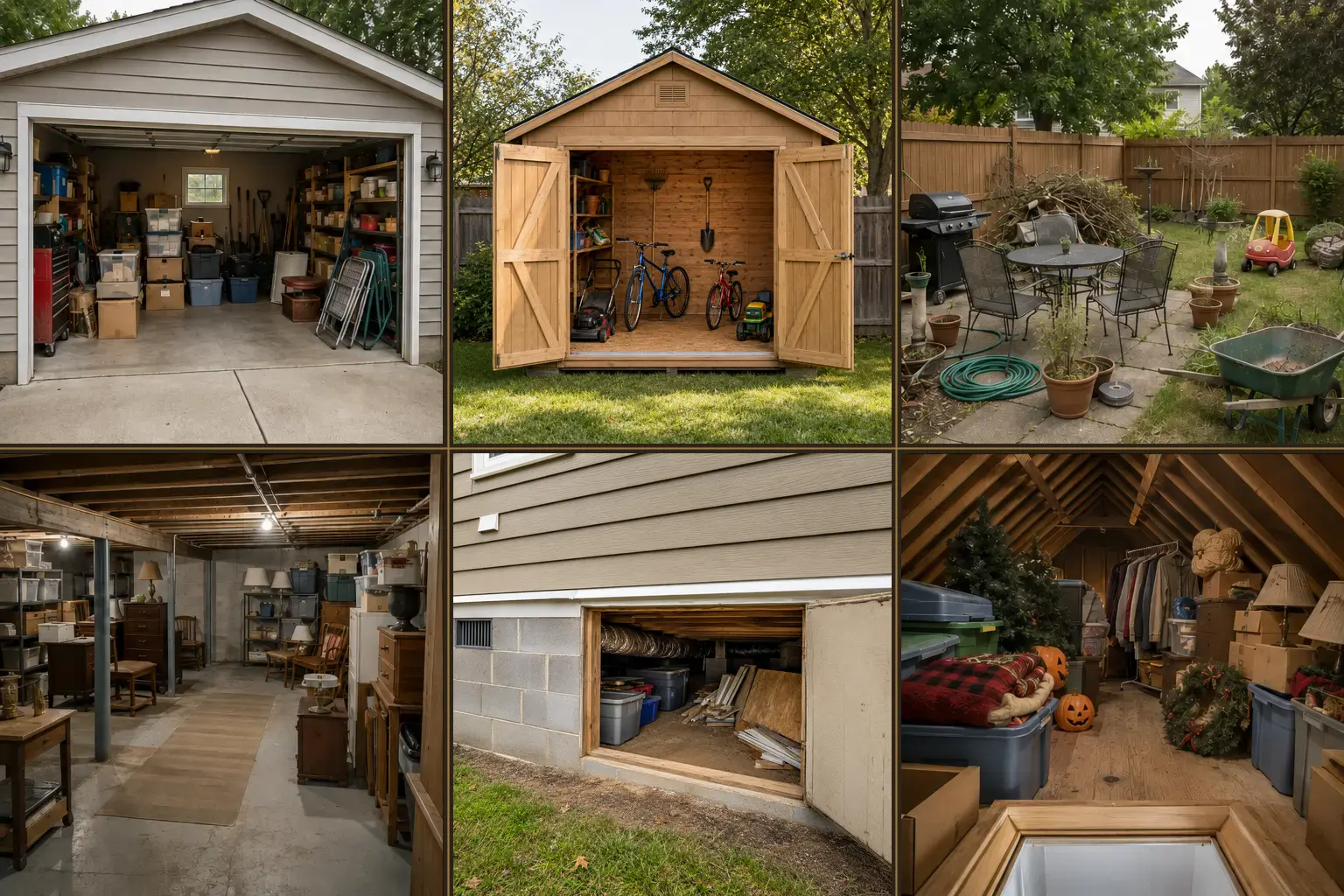
An estate cleanout estimate should clearly identify every area and service included—not just the rooms inside the house. A complete estimate may need to account for the garage, basement, attic, sheds, porches, patios, outdoor furniture, appliances, and yard debris, along with the condition in which the property will be left when the work is finished.
This is why the lowest price may not represent the best value—it may simply reflect the least complete scope of work. Two companies can visit the same property but base their estimates on very different amounts of work.
Why can one estate cleanout estimate be much lower than another?
Most people managing an estate cleanout have never been responsible for one before. You may know that the house needs to be emptied, but you might not immediately think about everything stored or abandoned elsewhere on the property.
One company may quote only the contents inside the house. Another may include the house, basement, garage, shed, porches, patio, outdoor furniture, appliances, and debris throughout the yard. The second estimate may be higher, but the companies are not pricing the same job.
A lower estimate does not necessarily mean that a company is being dishonest. The customer may not have mentioned every area, and the contractor may have priced only the work specifically discussed. However, that can create problems when overlooked areas are discovered after the job has started.
What areas should be included in a complete property cleanout?
Every property is different, but a thorough walkthrough should consider:
- Every room inside the house
- Closets and built-in storage
- Basements and attics
- Garages and workshops
- Sheds and detached buildings
- Front porches, decks, patios, and balconies
- Outdoor furniture, grills, planters, and lawn equipment
- Appliances and unusually heavy objects
- Loose materials and debris throughout the yard
- Items stored beneath decks or alongside buildings
- Any contents that require special handling
- The condition in which the property will be left
Even an area that appears small can add considerable labor, transportation, disposal volume, or handling time. Identifying it before work begins allows everyone to understand the complete project.
Why is a complete walkthrough important?
A complete walkthrough helps uncover work that may otherwise be overlooked.
Customers should not be expected to know every question to ask. An experienced estate cleanout professional should listen to what you are trying to accomplish, examine the entire property, and help identify what must be completed to reach that goal.
For example, emptying the interior of a house may not be enough if the property must also be prepared for settlement, listing, renovation, or occupancy. Furniture remaining on the porch, debris scattered through the yard, or a full garage can prevent the property from being truly ready.
A thorough walkthrough gives you a clearer plan before committing to a service.
Can an incomplete estimate lead to additional charges?
It can.
If a garage, shed, patio, or yard was not included in the original estimate, the contractor may charge additional money when that work is discovered. You could also experience delays, need to hire another company, or be left with a property that still is not ready.
This does not automatically mean that unexpected charges are improper. Conditions can be concealed, and customers sometimes add work after accepting an estimate. The important question is whether the original scope clearly described what was—and was not—included.
A complete written estimate reduces misunderstandings and unpleasant surprises for everyone involved.
How should you compare estate cleanout estimates?
Do not compare only the final prices. Ask each company:
- Which areas of the property are included?
- Are the garage and detached buildings included?
- Are porches, patios, and outdoor furniture included?
- Does the estimate include debris in the yard?
- Are labor, transportation, and disposal included?
- Are heavy or unusually difficult items included?
- What work is specifically excluded?
- How will the property be left when the job is finished?
- What circumstances could result in additional charges?
Once those questions are answered, you can make a genuine apples-to-apples comparison.
Does a higher estimate always mean a company is more expensive?
No. A higher estimate may include substantially more work.
One company may be charging more for the same service—but it may also be pricing areas and responsibilities that another company overlooked. You cannot determine which estimate provides better value until you understand the scope behind each number.
The most useful estimate is not necessarily the one with the lowest total. It is the one that clearly explains what will be completed, what the customer can expect, and what it will take to reach the desired result.
How Estate Closeouts approaches an estimate
At Estate Closeouts, we do more than glance inside the house and attach a price.
We begin by listening to what you need to accomplish. We then walk the property carefully, identify areas that may otherwise be overlooked, discuss the available options, and develop a practical plan for the complete situation.
You do not need to have everything figured out before calling us. We will help with what comes next.
Compare more than the number
Do not ask only what the cleanout will cost. Ask exactly what will be completed for that price.
That question can help prevent unexpected expenses, unnecessary delays, and unfinished work when you need peace of mind most.
Request a complete walkthrough